The Denim-Print Legging Mistake That Causes Unexpected Color Transfer
Quick Answer: Denim-print leggings use a printed dye pattern on synthetic fabric rather than actual indigo-dyed denim fibers, and this printed dye can transfer onto light-colored furniture or fabric through friction and heat before it’s fully cured, especially in the first several wears. Washing new denim-print leggings inside out in cold water before first wear, and avoiding prolonged contact with light fabrics initially, prevents most transfer issues.
Real denim eventually fades and can transfer some color, but a much faster, less predictable version of this happens with denim-print leggings - and it’s a fabric printing issue, not a denim issue.

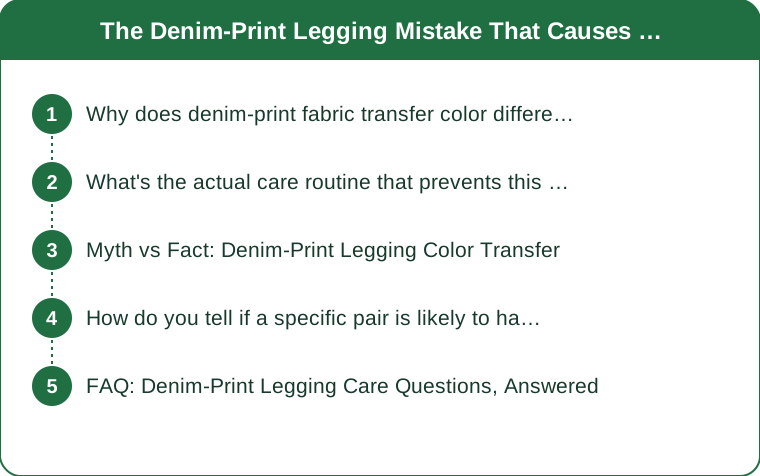
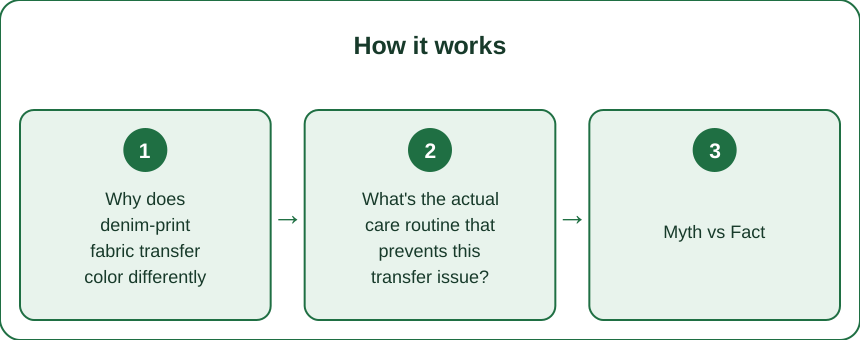
Why does denim-print fabric transfer color differently than actual denim?
Real denim’s indigo dye penetrates and bonds with the cotton fiber itself through a specific dyeing process, while denim-print leggings apply a printed pattern onto synthetic fabric (usually polyester-spandex) using a different dye application method that sits more on the surface of the fabric, at least until it’s fully cured through initial washes. This surface-level application is why denim-print pieces can transfer color through heat and friction more readily than actual denim, especially when new.
This explains why a genuine denim garment rarely stains a couch after normal sitting, while a denim-print legging - visually similar - sometimes does exactly that, particularly in the first few wears before the print has fully set through washing.
What’s the actual care routine that prevents this transfer issue?
Wash new denim-print leggings inside out in cold water at least once, separately from other clothing, before the first wear - this helps set the printed dye and removes any loose surface pigment that hasn’t fully bonded yet. Avoiding direct heat (dryer, ironing) for the first several washes also reduces the risk, since heat can reactivate or loosen surface-level dye that hasn’t fully cured.
Being mildly cautious about prolonged contact with light-colored fabric (a cream couch, a light car seat) during the first few wears, until you’ve confirmed through normal wear that a specific pair isn’t prone to transfer, is a reasonable practical precaution.

Myth vs Fact: Denim-Print Legging Color Transfer
Myth: Only cheap, low-quality denim-print leggings have this transfer problem. Fact: Print-based dye application is inherent to how denim-print fabric is made regardless of price point - higher-priced pairs can still transfer some color if not properly cured through initial washing.
Myth: If leggings haven’t transferred color in the first wear, they never will. Fact: Transfer risk decreases with each wash as looser surface dye sets or washes away, but it isn’t necessarily zero after just one wear - continuing gentle care for the first several washes is the safer approach.
Myth: This is the same issue as regular fabric dye bleeding in the wash. Fact: Wash-water bleeding and direct-contact transfer (onto furniture or other clothing through friction and heat) are related but distinct issues - a legging can be wash-safe with similar colors but still risk direct transfer onto furniture during wear.
How do you tell if a specific pair is likely to have transfer problems before it happens?
A simple test: press a slightly damp white cloth firmly against the fabric and hold for 10-15 seconds, then check for any color transfer onto the cloth. This quick test, done before first wear, reveals whether a specific pair has looser surface dye that’s likely to transfer during normal wear, without risking your actual furniture or clothing.
If the test shows any color transfer, an additional cold wash cycle before wearing typically reduces the risk further - repeating the damp-cloth test after that extra wash confirms whether the risk has been meaningfully reduced.
FAQ: Denim-Print Legging Care Questions, Answered
Does this transfer risk apply to denim-print tops and jackets the same way as leggings?
Yes - any denim-print garment made with the same printed-dye method carries a similar transfer risk, particularly in the first several wears before the print is fully set.
Will color transfer eventually stop happening entirely with a specific pair?
Usually yes - after several proper washes, the loose surface dye that causes transfer is largely washed away or fully cured, and the risk drops significantly for continued normal wear.
Is there a way to reverse color transfer if it’s already happened to furniture or another garment?
For most fabric furniture, a mild upholstery cleaner applied promptly can often lift printed dye transfer before it sets; for garments, treating the stain like a typical dye-transfer stain (cold water, appropriate stain remover) as soon as possible gives the best chance of removal.
TL;DR:
- Denim-print leggings use surface-applied dye that transfers differently than real denim’s fiber-bonded dye
- Wash new pairs inside out in cold water before first wear to help set the print
- Avoid heat (dryer, ironing) for the first several washes to reduce transfer risk
- A quick damp-cloth test before wearing reveals whether a specific pair is prone to transfer
If leggings that look like denim have left color on a couch or car seat, it’s a printed-fabric curing issue, not a defect - and it’s largely preventable with a proper first wash.
See It in Motion
Seen here: High Waist Yoga Leggings with Side Pockets — shop it on bubblelime.com
Keep Reading
This article is for general informational and styling purposes only. Fit, sizing, and product availability may vary.
